


Vaginal
Labia Reduction
Hymen Reconstruction
Vaginoplasty
Mons Pubis Liposuction
PROCEDURE GUIDE
Autologous Fat Grafting, Fat Injection Breast Augmentation, Lipofilling, Lipomodeling, Natural Breast Augmentation, Fat Transfer Augmentation Mammoplasty, Autologous Lipotransfer, Breast Fat Grafting, Natural Fill, Body Fat Transfer
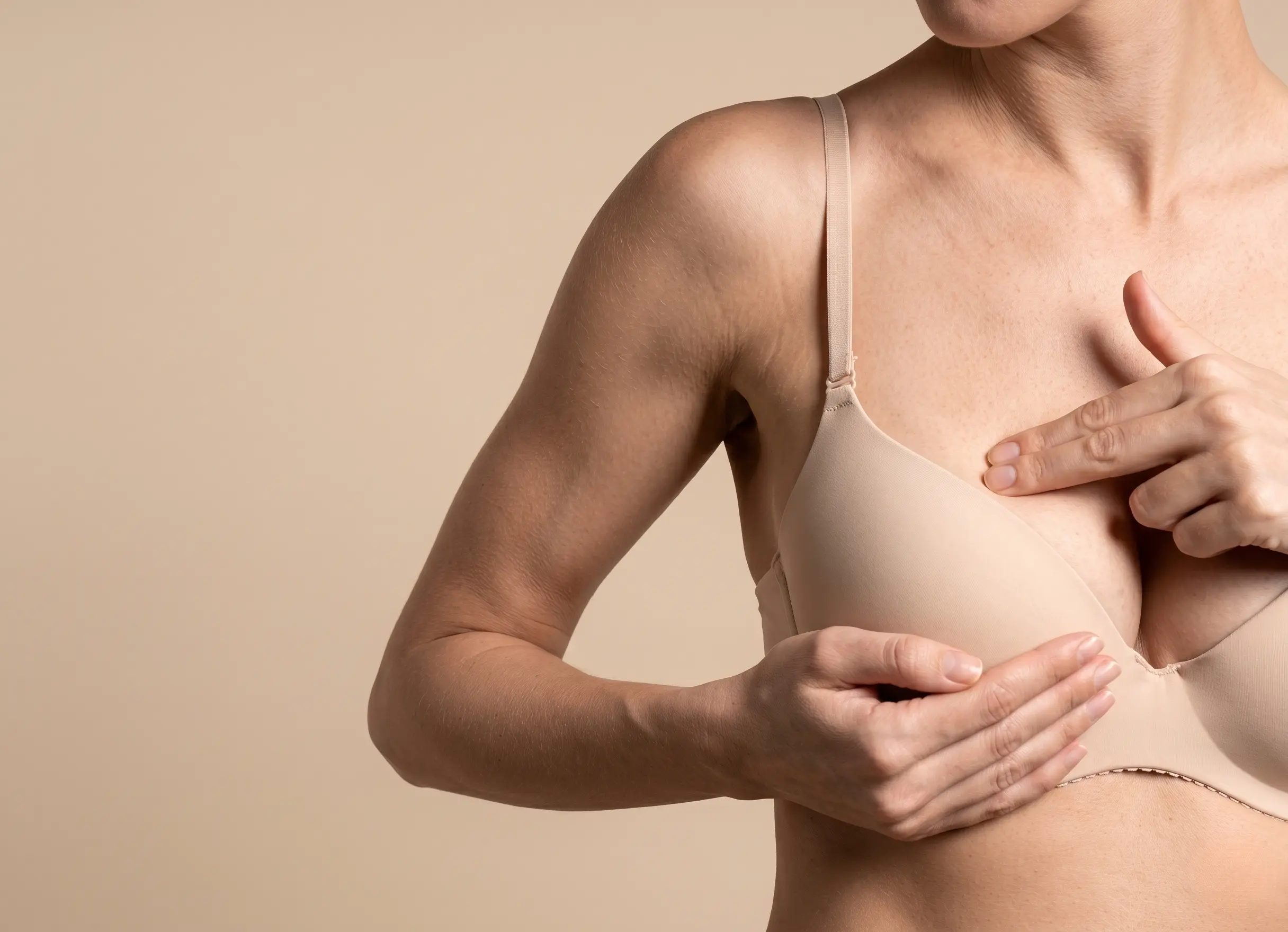
Fat transfer breast augmentation, sometimes called autologous fat grafting or breast fat grafting, is a surgical procedure that uses liposuction to remove fat from a donor area on your body, processes it, and then injects it precisely into the breast tissue to add volume and improve shape.
Because the fat comes from your own body, there is no risk of implant-related complications like capsular contracture, rupture, or implant displacement. The results feel completely natural because they are your own tissue. That said, this procedure is best suited for patients seeking a subtle to moderate increase in size rather than a dramatic transformation.
Understanding the differences between these two approaches helps you make the right choice for your goals and body type.
If you are unsure which approach suits your goals, our surgeons will walk you through both options at your consultation and give you an honest recommendation based on your anatomy and expectations.
Fat transfer breast augmentation works beautifully for the right patient. Ideal candidates typically:

Want a subtle to moderate increase in breast volume
Prefer natural results using their own body tissue
Are not interested in implants or want to avoid foreign materials
Have enough donor fat available in areas like the abdomen, thighs, or flanks
Are at or near their goal weight and plan to maintain it
Are in good overall health with no conditions that impair healing
Have realistic expectations about the degree of enhancement possible
This procedure may not be the right fit if you are very thin with limited donor fat, if you want to go up several cup sizes, or if you have significant breast sagging that requires a lift. During your consultation we will assess your candidacy and discuss whether fat transfer, implants, or a combination approach best serves your goals.
Fat transfer breast augmentation is an outpatient procedure performed under general anesthesia or local anesthesia with sedation. Here is what to expect on the day of your surgery.
Step 1
Your surgeon uses gentle liposuction to harvest fat from pre-selected donor areas, most commonly the abdomen, flanks, hips, or thighs. These areas are marked during your pre-operative appointment.
Step 2
The harvested fat is carefully processed and purified to isolate healthy, viable fat cells, separating them from fluid, oil, and damaged cells. Only the highest-quality fat cells are prepared for transfer.
Step 3
Using small, precise cannulas, the fat is injected into the breast tissue in multiple small deposits across different layers. This technique maximizes contact with the surrounding tissue and improves fat cell survival rates.
Step 4
Small dressings are applied to the liposuction and injection sites. You will be moved to recovery and monitored before going home with a trusted companion.
The entire procedure typically takes 2 to 4 hours depending on the amount of fat being transferred.
Rest at home. Swelling, bruising, and mild soreness in donor and breast areas. Pain medication provided.
Most patients feel comfortable and mobile. Continue light activity only.
Swelling begins to settle. Many patients return to desk work. Avoid pressure on breasts.
Avoid sleeping on your stomach or putting direct pressure on breasts to maximize fat cell survival.
Transferred fat settles. Some fat absorption is normal -- typically 30 to 50% of transferred volume reabsorbs over this period.
Final results become visible as the fat that has survived integrates fully into the breast tissue
Strenuous exercise should be avoided for 4 to 6 weeks. Your care team will provide detailed post-operative instructions and schedule follow-up appointments to monitor your healing and results.
Fat transfer breast augmentation produces a natural, soft enhancement that moves with your body. Most patients see a modest increase of approximately half to one cup size, though this varies based on the amount of fat transferred and how much survives the grafting process.
Results are long-lasting and, once the transferred fat has fully integrated, permanent. Maintaining a stable weight helps preserve your results, since significant weight fluctuations can affect the size of the transferred fat just as they affect fat throughout your body.
The cost of fat transfer breast augmentation in Toronto typically starts from around $11,300 +
and varies depending on the amount of liposuction required, the number of donor areas treated, the complexity of the procedure, anesthesia, and facility fees.
Financing options are available through our third-party financing partners. Exact pricing is determined only after your consultation, when we have assessed your anatomy and developed your surgical plan.
Not sure if fat transfer breast augmentation is right for you? Our surgical team offers free consultations to help you explore your options, understand the realistic outcomes for your body, and ask every question you have with no pressure and no commitment.
We welcome patients from Toronto, the GTA, and across Canada. Virtual consultations are available for out-of-town patients.
Most patients see an increase of roughly half to one cup size. The final result depends on how much fat is transferred and how much survives the grafting process. Fat transfer is best for subtle, natural enhancement rather than dramatic size changes.





