


Vaginal
Labia Reduction
Hymen Reconstruction
Vaginoplasty
Mons Pubis Liposuction
PROCEDURE GUIDE
Alternative Names : Eye lift, Upper Blepharoplasty
Of all the features on your face, the eyes communicate the most. When the eyelids start to show age, whether through heavy, drooping skin above or puffy bags below, the effect can be significant. Patients often describe looking perpetually tired, sad, or older than they feel, not because of how they live but simply because of how the skin and fat around the eyes have changed over time.
Blepharoplasty is a surgical procedure that corrects these changes. Depending on your anatomy and goals, it can involve the upper eyelids, the lower eyelids, or both. The upper procedure removes excess skin and addresses any unwanted fat deposits that weigh down the lid. The lower procedure targets under-eye bags, fine crinkling, and hollowing that creates shadowing beneath the eye. In both cases, the goal is the same: a rested, refreshed appearance that still looks exactly like you.
The skin of the upper eyelid is the thinnest on the body, which means it shows age earlier and more visibly than almost anywhere else. Over time, the skin loses elasticity and begins to fold and drape over the lid crease. Fat pockets that give the lid a full, youthful appearance can shift position or increase in volume. The muscle that lifts the lid may weaken slightly, compounding the heavy look. In advanced cases, this excess skin actually rests on the lashes and interferes with peripheral vision.
Pregnancy often leaves the most visible impact on the abdomen. As the abdominal wall stretches to accommodate a growing baby, the muscles naturally separate (a condition known as diastasis recti). While some women’s tissues bounce back post-pregnancy, many are left with:
Upper blepharoplasty is a relatively straightforward procedure performed under local anesthesia. An incision is made within the natural lid crease, which conceals the scar almost entirely once healed. Through this incision, the surgeon precisely removes the excess skin and, where present, excises or repositions fat pads that contribute to heaviness. The incision is closed with fine sutures and heals to a thin, nearly invisible line within the crease.
The procedure typically takes one to two hours, and most patients return home the same day. The incision line sits within the existing fold of the eyelid, meaning it becomes invisible once the eye is open. The result is a cleaner, more open lid with a defined crease and a naturally alert appearance.
Common signs of lower eyelid aging include:
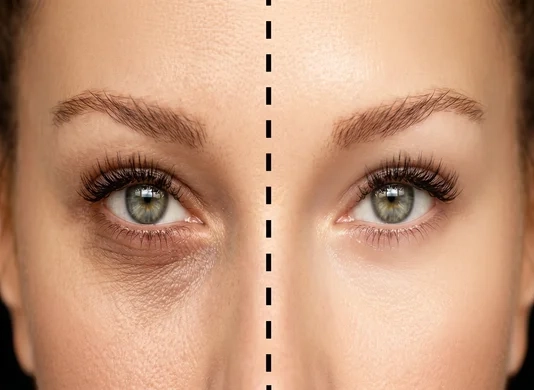
The lower eyelid ages differently than the upper. While the main concern above is skin excess, the main concern below is fat prolapse, which causes the characteristic under-eye bags that become more prominent with age. As the orbital septum, the thin membrane that holds the fat pads in place behind the lid, weakens over time, the fat shifts forward and creates visible bulging beneath the eye.
Loss of volume in the cheek just below can compound this effect, creating a groove or tear trough that separates the puffy fat above from the flatter cheek below. Dark circles, which are often worsened by the shadows cast by those protruding fat pads, are another common complaint. Fine crepe-like skin texture on the lower lid results from loss of collagen and elasticity.
Lower blepharoplasty is a more technically demanding procedure than upper blepharoplasty, requiring significant surgical experience to achieve a natural result. There are two main approaches:
The transcutaneous approach involves an incision just below the lower lash line, through which excess skin can be trimmed, fat can be removed or repositioned, and muscle can be tightened. This approach is best suited when both excess skin and fat removal are required together.
The transconjunctival approach places the incision inside the lower eyelid, leaving no visible external scar. This technique is ideal when the primary concern is fat removal or redistribution without meaningful skin excess. Because the incision is hidden entirely inside the lid, there is no risk of a visible scar and the recovery can be somewhat quicker. Fat can be repositioned into the tear trough groove rather than removed, which addresses hollowing and improves the transition between the lid and cheek in a particularly natural way.
The choice between these approaches is made at consultation based on the amount of skin excess, degree of fat prolapse, lower lid tone, and the patient's healing characteristics. Our surgeons discuss the approach and its rationale with every patient before surgery.
Most patients seeking eyelid surgery are between 35 and 65 years old, though good candidates can be both younger and older depending on their individual anatomy. Patients with hereditary puffiness or early-onset skin excess sometimes pursue upper blepharoplasty in their late twenties or early thirties. More commonly, patients notice the changes becoming bothersome in their forties and fifties.
Ideal candidates for blepharoplasty are:

In good overall health with no active eye conditions that would interfere with healing
Non-smokers, or willing to stop smoking at least two weeks before surgery and six weeks after
Realistic about expectations: blepharoplasty restores a refreshed appearance, not a different face
Free of conditions that increase surgical risk around the eye, such as severe dry eye, glaucoma, or thyroid eye disease
Motivated by their own goals rather than external pressure
Patients with dry eye syndrome, previous LASIK or laser eye surgery, or thyroid-related eye changes require additional evaluation before surgery. These conditions do not automatically disqualify you, but they affect both the surgical approach and post-operative care plan. All relevant history is reviewed during your consultation.
One point that is often overlooked in eyelid rejuvenation is the position of the eyebrow. When the brow has descended below its natural position, it pushes skin down onto the upper lid and can create or worsen the appearance of excess lid skin. In these cases, an upper blepharoplasty alone may not produce the full improvement a patient expects, and a brow lift may be worth considering either in combination or instead of eyelid surgery.
During your consultation, we assess the resting position of your brow and discuss whether addressing the brow would meaningfully improve your outcome. This is not a common conversation at all clinics, but it is important for setting accurate expectations and planning the right procedure.
A specialized form of blepharoplasty addresses the anatomy of eyelids in patients of Asian descent, where a portion of individuals are born without a defined upper lid crease. This is sometimes called single eyelid anatomy, and many patients seek double eyelid surgery to create a supratarsal crease that gives the eye a more open, defined appearance.
Double eyelid surgery is a highly specific procedure that differs meaningfully from standard upper blepharoplasty. The goal is crease creation rather than skin removal, and the approach must preserve the natural character of the eye rather than eliminate features that reflect your heritage. At SixSurgery, this procedure is performed with attention to the unique structural anatomy of the Asian eyelid, and the surgical plan is individualized based on your existing anatomy and aesthetic goals.
During your consultation, your surgeon will examine the upper and lower lids carefully, assess the position of your brow, evaluate your skin quality and fat distribution, and review your medical history. If you have had any prior eye surgeries including LASIK, cataract surgery, or a previous blepharoplasty, please bring that documentation. A recent eye examination from your optometrist or ophthalmologist is recommended before surgery, particularly for patients with dry eye, glaucoma, or any other eye condition.
Your surgeon will take standardized photographs for surgical planning and walk you through the specific approach recommended for your anatomy. This is also the time to discuss what a combined upper and lower procedure might involve, and what realistic results look like for someone with your particular anatomy.
In the two weeks before surgery, you will be asked to stop any medications or supplements that thin the blood, including aspirin, ibuprofen, naproxen, fish oil, vitamin E, and herbal supplements like ginkgo or garlic. Smoking should be stopped at least two weeks before and six weeks after surgery to support healing. You will need to arrange a drive home and someone to stay with you the first night. Avoid contact lenses for one week before the procedure.
Upper blepharoplasty is most commonly performed under local anesthesia in a surgical setting. The lid is carefully marked before anesthesia is administered. The incision follows the natural crease of the lid precisely. The surgeon removes the planned amount of skin, addresses any fat pads as needed, and closes the incision with very fine sutures. The other side is treated symmetrically. The procedure takes approximately one to one and a half hours for the upper lids alone.
Lower blepharoplasty can be performed under local or general anesthesia depending on the approach and whether it is being combined with upper blepharoplasty or other facial procedures. The transconjunctival approach is typically completed under local. Combined upper and lower cases often benefit from light general anesthesia. Your surgeon will make a recommendation based on your plan.
Swelling, bruising, and mild tightness around the eyes. Cold compresses and head elevation help significantly.
Peak swelling, which then begins to resolve. Vision may feel slightly blurred from ointment and swelling.
Sutures removed. Most patients are comfortable returning to work in a social capacity.
Residual swelling and minor bruising resolve. Incision lines may appear pink.
Final contour becomes clearer. Scars continue to fade and soften.
Result is fully settled. Scars are typically undetectable.
A supportive surgical bra is typically worn for 4 to 6 weeks after surgery. Sleeping on your back is recommended for the first few weeks. Your surgeon will provide individualized aftercare instructions and schedule follow-up visits to monitor your healing.
Upper Blepharoplasty
$5,700 +
Lower Blepharoplasty
$6,700 +
Combined Upper and Lower
$10,600 +
Blepharoplasty + Facelift
$32,300 to $72,500+
Blepharoplasty + Brow Lift
$19,300 – $38,300+
Pricing includes surgeon's fee, surgical facility, and anesthesia unless otherwise noted. Financing is available.
The results of upper blepharoplasty are long-lasting, typically ten years or more. The skin that was removed does not return, though natural aging continues in the surrounding tissue over time. Lower blepharoplasty results are similarly durable, particularly for fat removal or repositioning. Maintaining a stable weight, protecting skin from sun damage, and a consistent skincare routine help preserve results.





