


Vaginal
Labia Reduction
Hymen Reconstruction
Vaginoplasty
Mons Pubis Liposuction
PROCEDURE GUIDE
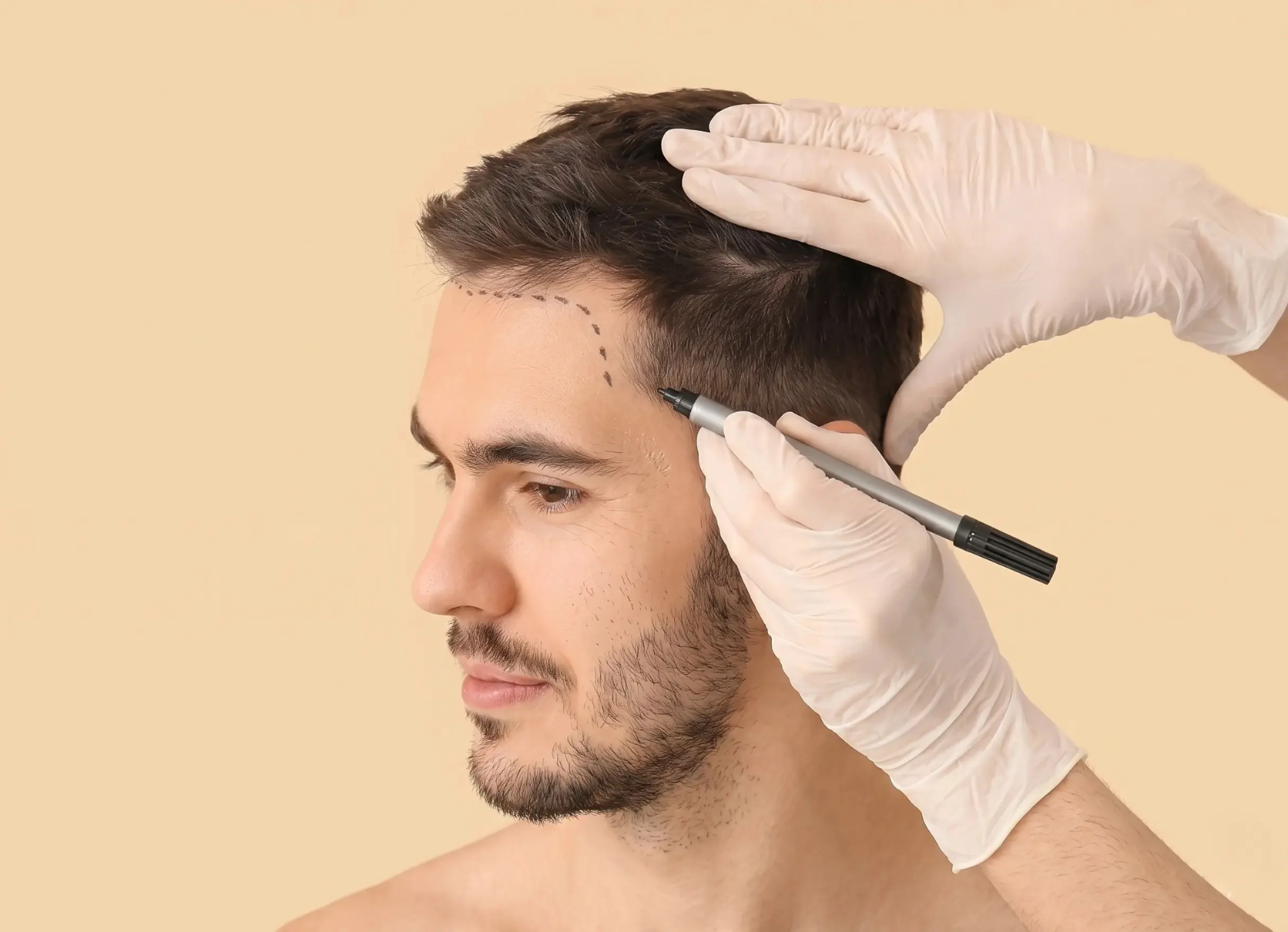
A hair transplant is a surgical procedure that takes healthy hair follicles from a donor area (typically the back or sides of your scalp, where hair is genetically resistant to loss) and moves them to areas where hair has thinned or stopped growing.
Once the transplanted follicles settle in and begin to grow, they behave exactly like your natural hair. You can wash it, style it, cut it, and grow it out. No special products, no ongoing treatments required, and no one will be able to tell you had it done.
There are two main techniques used today: FUE (Follicular Unit Extraction) and FUT (Follicular Unit Transplantation). Both are performed at SixSurgery in partnership with Nova Solutions, where the team will recommend the approach that makes the most sense for your hair type, the extent of your hair loss, and your personal goals.
Award-Winning Designs for Hairlines
Board Certified Plastic Surgeon-Led Hair Transplants
In-House Surgical Team
Decades of Combined Experience
Thousands of Surgeries
Natural Results (Patented Methods)
Toronto has no shortage of hair transplant clinics. So why does it matter where you go?
The biggest factor that separates a great result from a bad one is surgeon skill. At SixSurgery, our surgeons are directly involved, from hairline design to the surgical steps, with a trained team assisting under their supervision.
Here is what that means in practice:
SixSurgery operates out of a fully accredited facility in Toronto. The team has extensive experience across all hair types including straight, wavy, curly, and coily hair, and with patients of all backgrounds. We partnered with Nova Solutions to bring you hair experience matched with cosmetic surgical experience.
Not every hair transplant is the same. The two most common techniques have different strengths, and the right choice depends on your individual situation. Here is a straightforward comparison:
Most healthy adults experiencing hair loss are candidates for a hair transplant, but it is not the right fit for everyone. During your consultation, your SixHair experts will review a few key factors:
Hair transplants work well for male pattern baldness (androgenetic alopecia), hairline recession, crown thinning, and some cases of hair loss in women. They can also be used for beard and eyebrow restoration.
If you are not yet a candidate due to ongoing or unpredictable hair loss, SixHair experts will be upfront about that and discuss other options.
Male pattern baldness is staged using the Norwood-Hamilton scale, which runs from Class I (minimal recession) through Class VII (extensive crown and top loss with only a narrow band of donor hair remaining). As a general guide:
Graft counts are always confirmed during your consultation. Factors like follicle density, caliber, and scalp laxity all influence how many grafts can be safely harvested in a single session.
Hair transplantation is an option for women, though the approach differs significantly from male cases. Female hair loss most commonly presents as diffuse thinning across the top of the scalp rather than defined bald zones, which means the surgery focuses on improving density rather than restoring a completely bare area. The Ludwig scale is used to classify female pattern hair loss from Grade I (mild thinning) to Grade III (extensive thinning with visible scalp).
Women are generally good candidates when they have stable pattern hair loss with a band of resistant donor hair at the back. Women experiencing alopecia due to traction, trauma, or prior surgery are also strong candidates. Because female hair loss can have hormonal, nutritional, or autoimmune causes, we recommend a thorough medical evaluation prior to surgery to address any underlying contributors.
Everything starts with a thorough consultation. Your hair team will examine your scalp, assess your donor area, talk through your goals, and explain exactly what is possible. This is the time to ask every question you have, and there are no commitments required.
Hair transplant procedures at SixSurgery are done as an outpatient procedure under local anesthesia, so you are awake and comfortable the entire time. Here is a general walkthrough of what the day looks like:
Most patients find the experience far more comfortable than expected. You are free to listen to music, a podcast, or just rest during the longer harvesting and planting stages.
Recovery is one of the things people worry most about before booking, and the reality is much easier than most people expect. Here is what typically happens:
Most patients can return to desk work within a couple of days and resume strenuous activity like exercise or heavy lifting after one to two weeks.
Patience is a big part of the hair transplant journey. Most patients see initial growth starting around months 4 to 6, with noticeable density building through month 9. The full result, including maximum density and natural texture, settles in somewhere between 12 and 18 months.
Some patients use Minoxidil (Rogaine) topically after the procedure to support growth and address any non-transplanted thinning areas. Your SixHair experts will advise on whether this is appropriate for your case.
Male pattern baldness is by far the most common reason men pursue a hair transplant. Whether you are dealing with a receding hairline in your twenties or significant crown thinning later in life, the key is timing the procedure correctly and having a long-term plan.
SixHair experts design hairlines that look natural both now and in 20 years, taking into account how hair loss typically progresses with age and genetic patterns.
Hair loss affects roughly 50 percent of women at some point in their lives, but female hair transplants are still underdiagnosed and underperformed. Women typically experience diffuse thinning rather than complete baldness, which requires a different approach to graft placement and density planning.
SixSurgery treats female hair loss patients with the same level of surgical attention. Candidacy assessment is important here because some types of female hair loss respond better to non-surgical management, and SixHair experts will be honest about your options.
The cost of a hair transplant in Toronto varies based on the number of grafts needed, the technique used, and the complexity of the procedure. Most sessions in the Toronto market range from approximately $6,000 to $15,000 CAD, with pricing typically structured per graft.
At SixSurgery, pricing is transparent and provided after your consultation once the exact graft count has been assessed. Financing options are available to help spread out the cost over time.
It is worth noting that the cheapest option is rarely the safest or most effective when it comes to surgical hair restoration. The most important investment is in the skill of the surgeon performing the procedure.
The cost of a hair transplant in Toronto varies based on the number of grafts needed, the technique used, and the complexity of the procedure. Most sessions in the Toronto market range from approximately $6,000 to $15,000 CAD, with pricing typically structured per graft.
At SixSurgery, pricing is transparent and provided after your consultation once the exact graft count has been assessed. Financing options are available to help spread out the cost over time.
It is worth noting that the cheapest option is rarely the safest or most effective when it comes to surgical hair restoration. The most important investment is in the skill of the surgeon performing the procedure.
The first step is a conversation. Your SixHair experts offer consultations to help you understand your options and figure out whether a hair transplant is right for you. There is no commitment and no pressure.
Call us at (647) 478-2202 or use the form below to book your assessment. We work with patients in Toronto, the GTA, and from out of town.
The most common cause is androgenetic alopecia, which is hereditary and can begin as early as your twenties. Other causes include autoimmune conditions like alopecia areata, hormonal changes, nutritional deficiencies (especially iron), certain medications, thyroid disorders, and chronic physical or psychological stress. A consultation with SixHair experts will identify what is driving your hair loss before recommending treatment.





